Saturday, 16 June 2012


Xperia Ion is Sony’s first 4G LTE smartphone. In many ways it is Sony Xperia S – only better. It shares the best specs and features of the company’s flagship phone but sees some significant design and hardware upgrades.

Design

Sony Xperia Ion trades off the iconic LED bar of Xperia S for a larger display. Instead of three, it has four capacitive touch buttons below the screen for Menu, Home, Back, and Search. One thing it doesn’t give up is its rectangular form factor. The back, still slightly curved, makes it comfortable to hold despite its sizeable dimensions.
Despite its larger size, Sony Xperia Ion has the same weight as Xperia S. It’s not too heavy but it does miss the average weight of smartphones by 2 grams. Buttons for power and volume don’t protrude as much as they do on Sony Xperia S, giving it a cleaner look. Personally though, I prefer the placement of the volume rocker on Xperia S because it’s easier to reach with your right thumb when listening to music. On the bright side, it still has a dedicated camera button below the volume as well as a scratch-resistant glass to protect the display. Color options are limited to black.

Hardware and features

Sony Xperia Ion has several advantages over Sony Xperia S in terms of hardware. With a screen size of 4.55 inches, it doesn’t feel left out compared to behemoths like HTC One X and Samsung Galaxy S3. The phone also has fast 3G speeds at 21 Mbps which is almost twice what Sony Xperia S has to offer. Its biggest advantage by far is 4G connectivity. When connected to an LTE network, Sony Xperia Ion has upload speeds of 50 Mbps and download speeds of 100 Mbps.

Specifications


Sony Xperia Ion (AT&T) Sony Xperia S
Display 4.55-inch capacitive LCD
1280 x 720 pixels, 16M colors, 323ppi
4.3-inch capacitive LCD
1280 x 720 pixels, 16M colors, 342ppi
Processor 1.5GHz dual-core Snapdragon 1.5GHz dual-core Snapdragon
RAM 1024 MB 1024 MB
Graphics Adapter Adreno 220 Adreno 220
Storage Space Internal: 16GB External: NO Internal: 32GB External: up to 32GB expandable
Camera(s) Rear: 12MP with autofocus, LED flash Front: 1.3MP Rear: 12MP with autofocus, LED flash Front: 1.3MP
Connectivity Options Bluetooth 2.1 with A2DP, EDR WiFi 802.11 b/g/n microUSB 2.0 Bluetooth 2.1 with A2DP, EDR WiFi 802.11 b/g/n microUSB 2.0
Video 1080p at 30fps with continuous autofocus, video light, and video stabilizer 1080p at 30fps with continuous autofocus, video light, and video stabilizer
Battery Li-Ion 1900 mAh Li-Ion 1750 mAh
Dimensions and weight 5.24 x 2.68 x 0.42 inches, 144 grams 5.0 × 2.5 × 0.4 inches, 144 grams
Operating System and Software Android 2.3 Gingerbread (upgradeable to 4.0 Ice Cream Sandwich) Android 2.3 Gingerbread (upgradeable to 4.0 Ice Cream Sandwich)

A closer inspection of its innards will reveal some disappointing details. It has a limited 16GB internal storage and you won’t be able to expand it further than that since it doesn’t have a microSD card slot. You can, however, rely on cloud storage to store files. Its display also has a lower pixel density of 323ppi, making images and text less crisp compared to Xperia S. It has a beefier 1900 mAh Li-Ion battery but it drains faster than Sony Xperia S when mobile data is turned on. When 3G and 4G are not in use, it lasts a little longer than Sony Xperia S.
Camera features are similar in both phones. The 12-megapixel camera supports geo-tagging, touch focus, face and smile detection, 3D sweep panorama, and image stabilization. The 12-megapixel in itself makes it one of the best camera phones. Both also have the same dual-core processors, RAM, and connectivity options. A dual-core Snapdragon may not be a great feature but it’s more than enough for gaming and other tasks. Paired with a gigabyte of RAM, Sony Xperia Ion is both slick and good at multitasking. The phone is shipping with Gingerbread but Sony is expected to release an Ice Cream Sandwich update soon.

Verdict

AT&T is selling Sony Xperia Ion for $99 on a two-year contract; not bad for a high-end smartphone that lets you enjoy blazing fast 4G speeds. It does suffer from one major hiccup – limited storage. Cloud storage may be a modern way of storing photos, music, and files, but it’s not practical considering you have to pay for more than 5GB of space and need data or WiFi connectivity to access them. With that being said, Sony Xperia Ion isn’t for everyone despite its many perks. For the most part, it makes a wonderful option and has an edge over its competitors thanks to its 12-megapixel camera.
Sony Xperia Ion ATT vs Sony Xperia S

Friday, 1 June 2012

Before the iPad, tablets were a thing of the professional and business worlds, with normal users not being interested in them and manufacturers not even trying to market them to that audience. The reasons were mainly the high price, low performance and the complicated use – you had to use a stylus, and the operating system for most slates/convertible tablets was, of course, Windows, which isn’t really known for its touch friendliness even nowadays.
But things changed quickly after the iPad was released, and today you can find a dozen different tablets on the market, aimed at every niche possible, including budget models for those who want to spend as little as possible. If you’re going for an affordable tablet, here are some tips to help you chose the best one.

The display

You should pay extra attention to the display – it is the part you’ll be using most of the time, after all. The resolution should be 1024×600 pixels or higher, whether it’s a 10 inch tablet or smaller – anything less will look quite pixelated. The digitizer should be capacitive and support multitouch for the best experience, although most of the time, you’ll be using only a single finger at the time (yes, even when you’re switching between them – as long as two fingers don’t touch the screen, it doesn’t count as multiple touch points).

The processor and amount of RAM

Obviously, it’s wise to look at the internal hardware of the tablet you’re buying, and the processor and amount of RAM are the two most important specs – most of the current tablets already have the minimum recommended specs, but it never hurts to double check. The processor should be at least 1 Ghz and it’s highly desirable that it’s a dual core, although single core models aren’t all that bad. The absolute minimum of RAM a tablet should have is 512 MB, but 1024 is highly recommended if you’ll be installing more than a dozen apps.

The size and weight

The size and weight of a tablet are mostly a matter of personal preference, but there are a few things you should keep in mind. While 10 inch tablets are great for just about anything, they’re also heavier and clumsier to hold in your hands – a 7 inch tablet may be a perfect choice if you find that to be true. The weight is also the most important factor – even 100 grams can make a big difference when you’re holding the device for a prolonged period of time. The thickness also matters, but not that much – for a 10 inch tablet, there isn’t much of a difference between 16 and 10mm, for example (aside from aesthetics, of course).

The operating system and software features

The operating system is very important – fortunately, pretty much every modern tablet uses Android 3.0 or higher (of course, the iPad has iOS, which looks and works about the same in all versions). Android 3.0 has been designed for tablets and brings a whole new UI, sleek and nice and with a lot of capabilities. Of course, if you can find a budget tablet with Android 4.0, you should get it, but 3.0 should be more than enough for anyone.
Choosing a budget tablet is a bit harder than getting an affordable smartphone or laptop – there’s still not enough of them to drive the price lower, but you can definitely find a great model for a nice price, with all the features you might need if you look around a bit – just keep in mind the tips above and you’ll surely get the best device.

Monday, 28 May 2012


Logitech Mini Boombox review

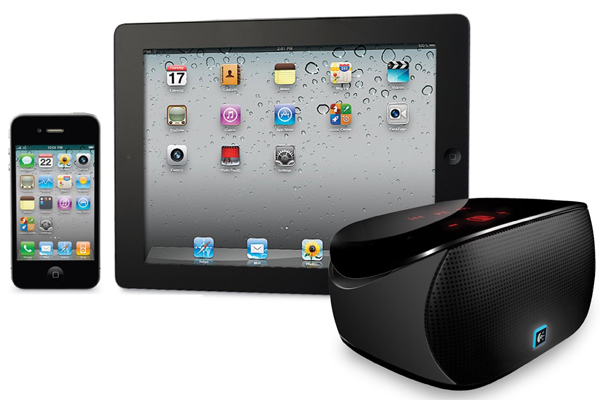
Logitech’s Wireless Boombox isn’t the most portable speaker around. But if you want to play music from your iPhone, iPad, or any other Bluetooth-enabled device, it’s something you can take around with you. It retails for $150 and had incredible sound quality. Mini Boombox is $50 cheaper and half the size of Boombox. It’ll fit easily on the top of your hand and charges with a mini-USB instead of a standard USB. But can it live up to the larger Boombox in terms of performance? Or is it just as small as its size?

Design

Mini Boombox measures only 4.55 x 2.8 x 2.28 inches and weighs only half a pound. It has rounded corners and doesn’t have physical buttons, save for the on/off switch at the back. The mini-USB charging port can also be found in the back along with an auxiliary input. When you turn it on, capacitive buttons will light up in red and can be used for controlling music playback. They’re not as reactive as physical buttons but when you press them, they work quite well. The capacitive buttons are to be used for going forward, back, playing, and pausing music. Unfortunately, they’re near invisible under direct sunlight.

Logitech-Mini-Boombox2

I’m pretty sure you’ll love the rubber bottom of Mini Boombox. Because of this design, it easily latches on to slippery surfaces – even your car’s dashboard – without an adhesive. It can stay put for hours at a time before needing any replacement. There’s also an indicator that will notify you of a low battery status. Sadly, there’s no way of knowing that it’s fully charged.
Logitech-Mini-Boombox3

Performance

It easily pairs with Bluetooth-enabled devices that support A2DP but you can also connect devices via its 3.5mm audio output. The iPad, iPhone 3G and later, and iPod Touch 2nd generation and later are among those listed to be compatible to it. What may come as a surprise is that it plays music just as loudly as its bigger brother. It’s something anyone won’t expect from a speaker of this size. The sound coming from its two 3W speakers will easily fill a small room – a performance we usually expect from larger speakers like Boombox and Jambox.

Logitech-Mini-Boombox4

Mini Boombox can never take the place of midrange to high-end speakers in terms of sound quality though you can use it as a speaker for your laptop; in case you decide to watch videos or play music from there. Even if you use it to play music outdoors, sound quality remains good. Battery performance is even more impressive than one would’ve imagined. Mini Boombox can last up to 10 hours of playback when fully charged.

Verdict

Mini Boombox is one of the greatest deals you’ll find when looking for an ultra-portable speaker that retails for $100 or less. It’s amazing how a small speaker such as this can deliver great sound quality. It’s the perfect gadget accessory for those who travel a lot and people who loved the performance of Boombox but aren’t as willing to shell out an additional $50.

Tuesday, 22 May 2012


Thunderbolt is the next-generation I/O interface that significantly boosts file transfer rates. With transfer rates of up to 10 Gbps, Intel says that it can transfer a full-length HD movie in less than 30 secs. Compare that to USB 2.0 and it is generations ahead in both read and write speeds. Asus today announced P8Z77-V Premium, a mainboard that supports the exact same high-speed interface. It is the first Intel-certified motherboard with Thunderbolt.
Thunderbolt is said to be two times faster than USB 3.0 and 20 times faster than USB 2.0 which remains to be the most widely used I/O technology across most devices. Each Thunderbolt port is capable of reading and writing 10 Gbps and up to six compatible devices can be connected to Asus P8Z77-V Premium. Fully display support with a monitor equipped with either DisplayPort or Thunderbolt is also made possible by a seventh port. But you won’t be limited to Thunderbolt with P8Z77-V Premium because it also includes half a dozen USB 2.0 and five USB 3.0 ports.

Hardware

Specifications
Asus P8Z77-V Premium Motherboard
Form factor ATX Form Factor, 12 x 9.6 in
CPU Intel socket 1155 for 3-rd/2-nd Generation Core i7/Core i5/Core i3/Pentium/Celeron Processors; Supports Intel 22nm, 32nm CPU and Turbo Boost Technology 2.0 depending on CPU types
Chipset Intel Z77
Memory 4 x DIMM, Max. 32GB, DDR3 1066/1333/1600/1800(OC)/1866(OC)/2000(OC)/2133(OC)/2200(OC)/2400(OC)/2600(OC)/2800(OC)
Non-ECC, Un-buffered Memory
Dual Channel Memory Architecture
Supports Intel Extreme Memory Profile (XMP)
*Hyper DIMM support varies depending on CPU
Graphic Integrated Graphics Processor Multi-VGA output support: HDMI/DisplayPort/Thunderbolt ports
Multi-GPU support Supports NVIDIA 4-Way SLI, AMD 4-Way CrossFireX, and LucidLogix Virtu MVP Technology
Expansion slots 4 x PCIe 3.0/2.0 x 16 slots 2 x PCIe 2.0 x 1 slots
Storage Intel Z77 chipset: 2x SATA 6Gbps ports
3x SATA 3Gbps ports
1x mini-SATA 3Gbps ports with on-board 32GB SSD
Support Raid 0, 1, 5, 10
Supports Intel Smart Response, Rapid Start, and Smart Connect Technology
Marvell PCIe 9230 controller:
4x SATA 6Gbps ports
Support Raid 0, 1, 10
ASMedia PCIe SATA controller:
2x eSATA 6Gbps
LAN Intel 82579V, 1x Gigabit LAN Controller Intel 82583, 1x Gigabit LAN Controller
Dual Gigabit LAN controllers
Intel LAN Dual interconnect between the integrated LAN controller and Physical Layer (PHY)
Wireless Data Network WiFi 802.11 a/b/g/n Supports dual bad frequency 2.4/5 GHz
Bluetooth Bluetooth 4.0, Bluetooth 3.0 + HS
USB ports ASMedia USB 3.0 controller: 2x USB 3.0 ports Intel Z77 chipset: 4x USB 3.0 ports or 6x USB 2.0 ports
Overclocking features ASUS CPR (CPU Parameter Recall)

Features

One feature of Asus P8Z77-V is multiple SSD caching for installing multiple SSDs without restrictions on capacity. The same feature also allows installation of different HDD/SDD combinations for optimum performance. The onboard 32GB mSATA SSD enables fast boot times and reduces resume times coming from sleep or hibernate. Smart DIGI+ technology boosts performance speeds by up to 85 percent but can also reduce CPU wattage at the same time, cutting it in half.
These are but a few of the many cool features of Asus P8Z77-V Premium. Other functions include real-time network bandwidth control, USB BIOS flashback, and faster USB 3.0 Transmission with UASP. The motherboard also supports ASUS Crystal Sound for an improved audio experience.

Saturday, 12 May 2012

At the peak of NVIDIA’s graphics cards is GK104, better known as Kepler or GTX 680. GeForce GTX 670 is still Kepler in its essence but with less power and a cheaper price. It rivals AMD Radeon HD 7950. NVIDIA claims it is more powerful than the best AMD processors and we are here to find that out.

Design

It’s rarely that we see top-tier graphics cards come in slim packages and GTX 670 is just that. It is compact and lightweight much like GTX 680. It measures only 7 inches long if we exclude the PCIe bracket. GeForce GTX 670 is equipped with one DisplayPort, one HDMI port, and two separate DVI outputs. Shown off during its unveiling is a dual-slot design but NVIDIA remarks some of their partners are opting for single-slot options.

Technically speaking, GTX 670 is GTX 680 because it uses the same GK104 chip. Unlike 680, it has one Streaming Multiprocessor (SM) unit turned off and reduced to 112 texture units from 128. It does keep the 32 ROPs of GTX 680, staying true to its roots.
Specs

GTX 670 has 12% less cores. 192 CUDA scores were nicked off, to be exact, in favor of the lower price point. It is also clocked at the lower 915MHz frequency making it 12% slower than GTX 680. These downgrades are minimal and keeps the graphics card on top-chart performance.
Performance

NVIDIA GeForce GTX 680 underwent preliminary benchmarks and was compared to GeForce GTX 580 and Radeon 7950. It was first tested with 3DMark7 to assess how it performed against its predecessor and rival.